
Kind vs. Nice: Why the Words We Choose Change Everything for Kids, Adults, and Leaders
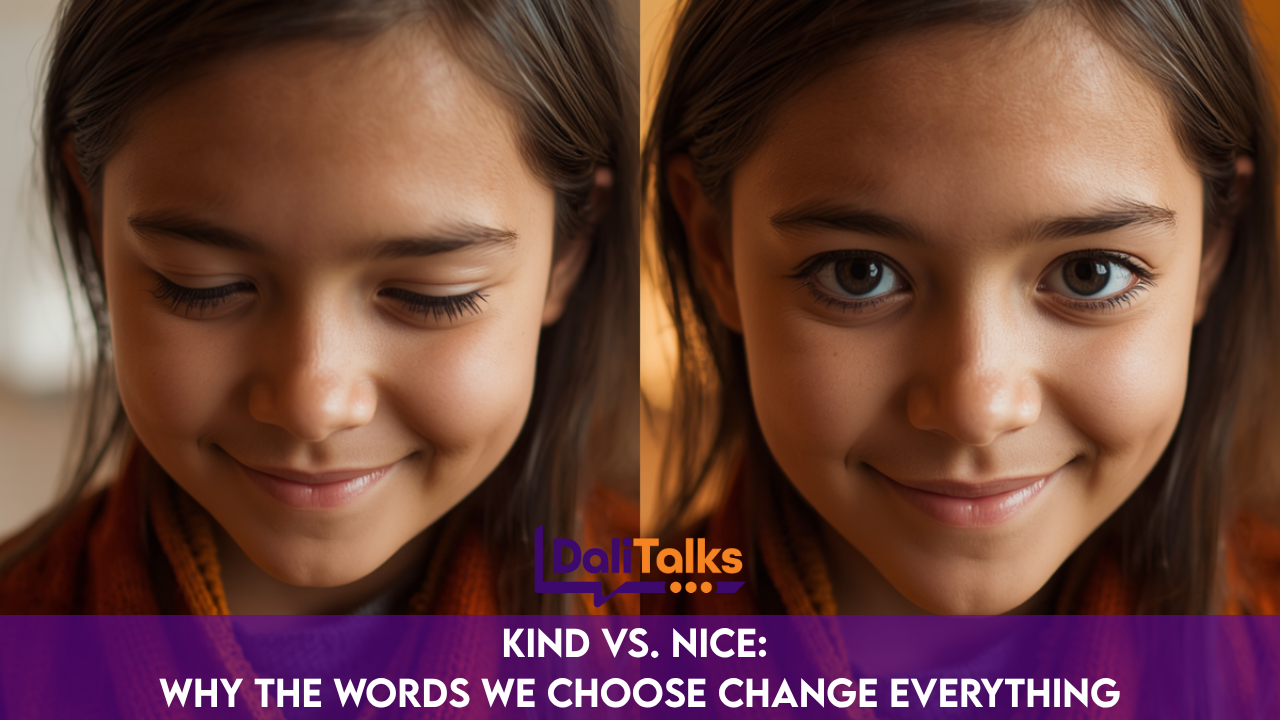
One word can silence a child. Another can save them. And most of us have been using the wrong one our entire lives.
We teach kids to be nice. We reward them for being agreeable, quiet, and accommodating. We tell them nice is good. Nice is safe. Nice is what good people are. But what if nice is actually the problem?
There is a powerful and often overlooked difference between being kind and being nice, and once you see it, you cannot unsee it. This distinction matters for children navigating friendships. It matters for parents trying to raise confident kids. It matters for educators managing classroom dynamics. And it matters deeply for leaders who want to build cultures where people feel safe enough to tell the truth.
Nice Keeps You Quiet. Kindness Gives You a Voice.
Niceness is rooted in approval. A nice person says yes because they are afraid of what happens if they say no. They smile through discomfort. They shrink to keep the peace. They prioritize how others feel about them over what they actually know to be true or right.
Kindness is different. Kindness is rooted in respect, and it starts with self-respect. A kind person can say no with warmth. They can disagree without cruelty. They can hold a boundary and still care about the person standing on the other side of it.
"Nice is performance. Kindness is character."
And when we fail to teach children this distinction, we leave them vulnerable.
What This Looks Like in a Child's World
Many kids confuse being nice with being kind because we teach them to. We tell them to share even when they do not want to. We tell them not to make a scene. We tell them to just ignore it, be the bigger person, keep smiling.
And then we wonder why they do not speak up when a friend crosses a line.
Fake friends love nice kids. They love them because nice kids are trained to tolerate disrespect without naming it. They stay quiet when they should speak up. They laugh along when something hurts. They keep showing up for people who have proven they do not deserve it.
Kind kids are different. Kind kids know when to walk away. They have been taught that protecting their own dignity is not the same as being mean. They understand that a friendship built on someone else's comfort at the expense of their own is not a friendship at all.
Teaching your child the difference between nice and kind is one of the most powerful things you can do for their long-term emotional health and their ability to recognize and resist bullying dynamics.
If you want a deeper guide to raising a child who can protect themselves while still leading with love, Confident, Bully-Proof Kids is a great place to start.
What This Looks Like in Adult Communication
This is not just a children's issue. Adults carry these same patterns into every room they walk into.
The nice employee who never pushes back in meetings, even when they know something is wrong. The nice manager who avoids hard conversations until a small problem becomes a crisis. The nice colleague who laughs at a comment that made them deeply uncomfortable because they did not want to seem difficult.
Niceness in professional spaces often looks like professionalism. But it is not. It is conflict avoidance dressed up in polite language. And it costs organizations more than they realize. It kills psychological safety. It keeps important perspectives off the table. It creates environments where people say what they think you want to hear instead of what you actually need to know.
Kindness in the workplace looks like honesty delivered with care. It is the leader who gives real feedback instead of empty praise. It is the team member who raises a concern because they respect the process enough to protect it. It is the communicator who chooses precision over pleasantness when precision is what the moment requires.
That is the kind of communication culture worth building. And it starts with understanding that kindness and niceness are not the same thing, and they do not produce the same results.
If you want tools and strategies for building that kind of culture inside your organization, join the DaliTalks email list here for weekly insights on inclusive communication, leadership, and language.
The Leadership Dimension
Inclusive leadership requires kindness, not niceness. Full stop.
A nice leader avoids discomfort. They smooth things over. They tell people what they want to hear. They prioritize harmony over honesty and in doing so, they make their team feel unheard, unseen, and ultimately unsafe.
A kind leader leans into discomfort with intention. They name what is happening in the room. They hold people accountable without humiliating them. They respond to the behavior, not the person. They create space for hard conversations because they know hard conversations are where real growth lives.
This distinction shows up in how leaders respond to conflict, how they give feedback, how they handle complaints, and how they model communication for everyone watching them. And everyone is always watching.
The words we choose reveal the values we hold. Niceness says "I need you to like me." Kindness says "I respect you enough to be honest with you." One builds a comfortable environment. The other builds a trustworthy one.
Start With the Words
The shift from nice to kind starts with language. It starts with teaching your child to say "that does not feel right to me" instead of just going along. It starts with the leader who says "I want to give you feedback because I believe in your growth" instead of staying silent to avoid tension. It starts with the parent, the educator, the manager who decides that honesty delivered with care is always more loving than silence delivered with a smile.
Words are not neutral. They shape how we see ourselves, how we treat others, and what we are willing to tolerate. Choosing them intentionally is one of the most powerful acts of advocacy and leadership available to any of us.
If you are ready to go deeper on intentional language, inclusive communication, and how to raise and lead with both courage and compassion, sign up for the DaliTalks email list here. Every week I share practical tools to help you speak up, lead well, and keep the people in your care protected. Because the right words at the right moment can change everything.
